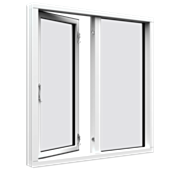
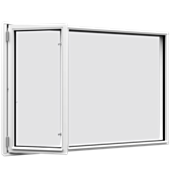
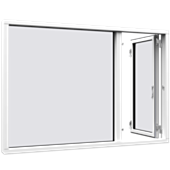
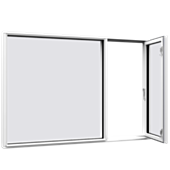
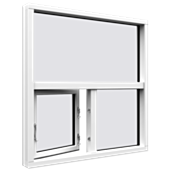
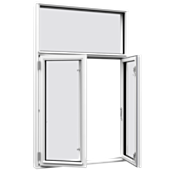
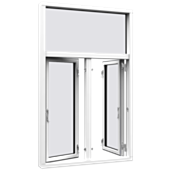
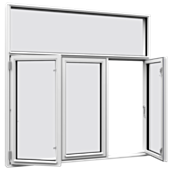
What is a casement window?
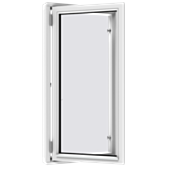
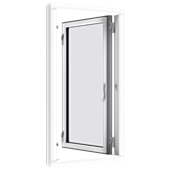
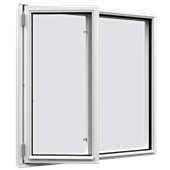
A casement window is a window hinged at the side, so the opening part swings out like a door. The part that moves is called the sash. Casement windows have no horizontal bar across the middle, which is what gives them a clearer view than a sash window of the same size.
The style has been in British houses since it replaced stone mullioned windows, and it stayed popular because it adapts to almost any opening. One frame can hold a single pane or half a dozen.
What does "light" mean on a window?
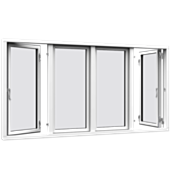
A light is one division of a window within its frame. A 1-light casement is a single pane in a single frame. A 3-light casement is one frame divided into three, and each of those three can be fixed or opening.
The word is worth knowing because it is how the trade describes windows, and it is how our range is organised. When you see "2 light 2x1" or "4 light top light", the number tells you how many divisions the frame has.
Casement window configurations we make
| Configuration |
What it is |
Suits |
| 1 light |
One opening sash in one frame |
A small opening, a bathroom, a landing |
| 2 light 2x1 |
Two divisions side by side |
The most common domestic window |
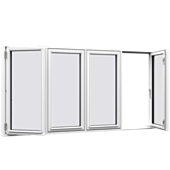
| 3 light and 4 light |
Three or four divisions in one frame |
A wide opening in a living room or kitchen |
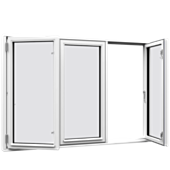
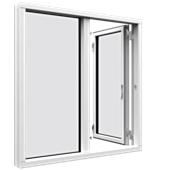
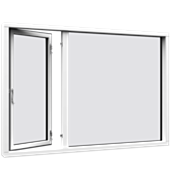
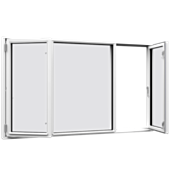
| Fixed casement, open left or right |
One side opens, the rest is fixed glass |
More daylight, less hardware, where you only need one opening |
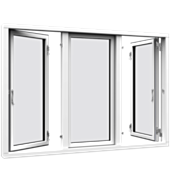
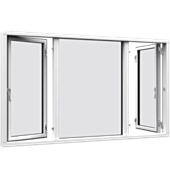
| 3 light fixed centre |
Fixed pane in the middle, opening lights either side |
A wide view with ventilation on both sides |
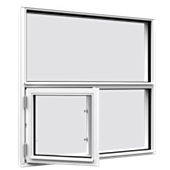
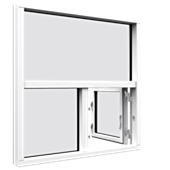
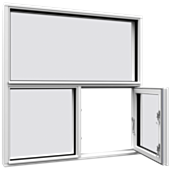
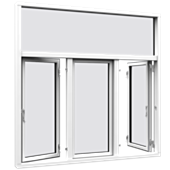
| 3 light and 4 light with top light |
A separate opening light above the main lights |
Ventilation without opening the main sash |
| Side hung left or right |
A single sash hinged on the side you choose |
Matching the swing to the room |
Every configuration is made to measure, so the table describes the layout, not a fixed size.
Single, double and side hung casement windows
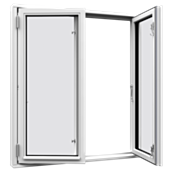
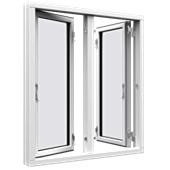
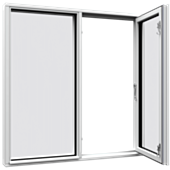
A single casement window has one opening sash. A double casement window has two, side by side in one frame, hinged on opposite edges so they meet in the middle. Both are casement windows. The difference is how many sashes open, not how they work.
You may also see either described as side hung, which is the trade term for a sash hinged on its vertical edge. It means the same thing.
Which one do you need?
Go by the width of the opening. One sash has a practical width limit, because it hangs its own weight and glass on hinges down one edge. Past that, two narrower sashes open more easily and put less strain on the hardware.
A single casement suits a bathroom, a landing, a small bedroom or anywhere the opening is narrow. A double suits a living room, a kitchen or a main bedroom, where you want a wide opening and light from the full width.
Where to find each one
Single casements and multi-light frames with one or more opening sashes are on this page, from a 1-light window up to a 4-light with a top light.
If you want two full-height sashes hinged on opposite edges in one frame, see our double side hung windows. It is the same window most people mean by a double casement.